
Class 8 :- Curiosity Chapter 3 :- Question and answer
2) Diseases can be broadly grouped into communicable and non-communicable diseases. From the options given below: identify the non-communicable diseases
i) Typhoid ii) Asthma iii) Diabetes iv) Measles
a) i and ii b) ii and iii c) i and iv d) ii and iv
Answer:- Correct option is b) Asthama and Diabetes
3) There is a flu outbreak in your school. Several classmates are absent, while some are still coming to school, coughing and sneezing.
i) What immediate actions should the school take to prevent [the spread]?
Answer: The school should close temporarily, sanitize classrooms, and encourage sick students to stay home to prevent further spread.
ii) If your classmate, who shares the bench, now starts showing symptoms of the flu, how can you respond in a considerate way without being rude or hurtful?
Answer: You can politely suggest that your classmate see a doctor and take rest at home, and offer to share notes with them.
iii) How can you protect yourself and others from getting infected in this situation?
.Answer: To protect yourself or others, wash your hands frequently, avoid close contact, and wear a mask.
4) Your family is planning to travel to another city where malaria is prevalent.
i) What precautions should you take before, during, and after the trip?
Answer: To protect our family from malaria during travel, focus on preventing mosquito bites and taking prescribed preventive medication. Before travel, consult a doctor, get necessary vaccinations, and pack mosquito repellent and protective clothing. During the trip, continue using repellent, wear long sleeves and pants, and sleep under a mosquito net. After returning, monitor for any symptoms like fever and seek immediate medical attention if they occur.
ii) How can you explain the importance of a mosquito net or repellent to your sibling?
Answer: Explain to your sibling that mosquitoes spread malaria and that nets or repellents can help by blocking bites.
iii) What could happen if travellers ignore health advisories in such areas?
Answer: If travelers ignore health advice in such areas, they risk malaria infection, severe illness, or even death.
Q5) Your uncle has started smoking just to fit in with friends, even though it is well known that smoking can seriously harm health and even cause death.
i) What would you say to him to make him stop without being rude?
Answer: “Dear Uncle, I care about your health and well-being, and I want to talk to you about smoking. It’s well known that smoking can lead to serious health issues, including heart disease and lung cancer. Quitting smoking can greatly improve your health and quality of life.”
ii) What would you do if your friend offers you a cigarette at a party? How can you explain the importance [of not smoking]?
Answer: Politely decline the cigarette at the party and explain the health risks to your friend.
iii) How can schools help prevent students from indulging in such harmful habits?
Answer: Schools can help prevent students from indulging in such habits by educating them about all the health risks and organizing awareness programs regularly.
Q6) Saniya claims to her friend Vinita that “Antibiotics can cure any infection, so we don’t need to worry about diseases.” What question(s) can Vinita ask her to help Saniya understand that her statement is incorrect?
i) Why is Soniya’s statement wrong?
Answer: Antibiotics only work against bacterial infections, not viral ones like the flu or the common cold.
ii) Overuse or misuse of antibiotics can lead to antibiotic resistance, making them less effective in the future.
iii) Some diseases are caused by fungi, protozoa, etc., which require different treatments. Also, if we take antibiotics when we don’t need them, they might stop working when we really need them. That’s why doctors are careful about prescribing them.
Q8) Imagine you are in charge of a school health campaign. What key messages would you use to reduce communicable diseases?
Answer: Key messages for a school health campaign to reduce communicable and non-communicable diseases include washing hands regularly, eating a healthy diet, exercising daily, getting vaccinated, and avoiding smoking.
Q9) It is recommended that we should not take an antibiotic for a viral infection like a cold, a cough, or the flu. Can you provide the possible reason for this recommendation?
Answer: The recommendation to avoid antibiotics for a viral infection like a cold, cough, or flu is because antibiotics do not work on viruses, which cause these illnesses.
Q) Which diseases among the following may spread if drinking water gets contaminated by excreta from an infected person?
(Hepatitis A, Tuberculosis, Poliomyelitis, Cholera, Chickenpox)
Answer: The diseases that may spread if drinking water gets contaminated by the excreta from an infected person are Hepatitis A, Poliomyelitis, and Cholera.
v) When our body encounters a pathogen for the first time, the immune response is generally low, but on exposure to the same pathogen again, the immune response by the body is much greater compared to the first time. Why?
Answer: When our body faces a pathogen for the first time, our immune system needs time to:
Identify the invader.
Create specific antibodies.
Build memory cells that remember the pathogen.
This first reaction is called the primary immune response; it is usually slow and weak.
When the same pathogen enters our body again, our memory B cells quickly produce the correct antibodies. Our memory T cells help to destroy the infected cells faster. This is called a secondary immune response. It is faster and more effective.
The following table contains information about the number of dengue cases reported in a hospital over a period of a year:
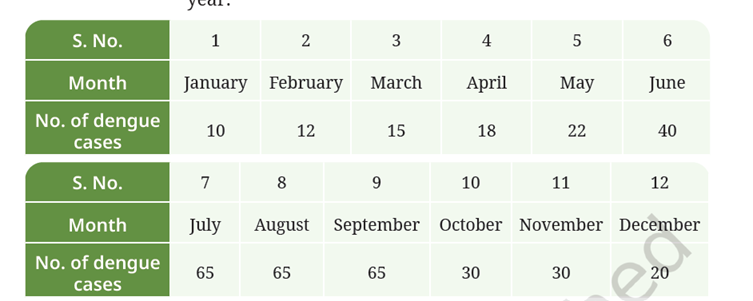
Make a bar graph of the number of cases on the Y-axis and the months on the X-axis. Critically analyze your findings and answer the following:
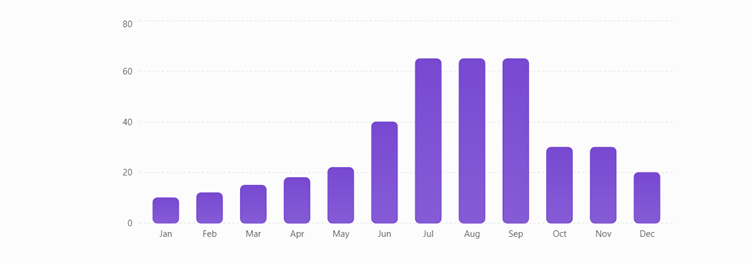
i) In which three months were the dengue cases highest?
Answer: The dengue cases were highest in the months of July, August, and September.
ii) In which month were dengue cases lowest?
Answer: The cases were lowest in the month of January.
iii) What natural or environmental factors during peak months might contribute to the increase in dengue cases?
Answer: Natural and environmental factors during peak months, such as the rainy season and standing water for mosquito breeding, might contribute to the increase in dengue cases.
iv) Suggest a few preventive steps that the community or government can take before the peak season to reduce the spread of dengue
Answer: The community or government can take preventive steps like removing stagnant water, using mosquito nets, and spraying insecticides during this period.
Q Explain the role of the immune system in fighting diseases.
Answer: The immune system protects the body by identifying and destroying pathogens like bacteria and viruses using white blood cells (WBCs) and antibodies. It provides natural immunity and can be enhanced by vaccines for acquired immunity.
Q Could climate change lead to new types of diseases?
Answer: Yes, climate change can lead to new or increased disease risks. Warmer temperatures and changing weather patterns can expand the range of disease-carrying vectors like mosquitoes, alter water quality, and create conditions for new diseases.
Q 14) Explain how stress can affect your health.
Answer: Stress weakens the immune system by releasing hormones like cortisol, making you more prone to infections like the common cold. It can also lead to high blood pressure, insomnia, and contribute to non-communicable diseases like diabetes or cause poor sleep.
Q Why is it important to use antibiotics wisely?
Answer: Using antibiotics wisely prevents antibiotic resistance, where bacteria survive treatment and become harder to kill. This ensures antibiotics remain effective for future bacterial infections, as overuse can lead to severe health risks.
Q)
Answer: Health means feeling good in your body, mind, and social life, not just being free from sickness. A healthy person has a strong body, a peaceful mind, and good relationships with others. Eating healthy food, exercising regularly, getting enough sleep, and keeping clean help us stay physically healthy.
Mental health is just as important. It helps us to think clearly, make good choices, and deal with stress. Spending time with family and friends, staying positive, and talking about our feelings with others we trust can help us maintain good mental health.
Social well-being means getting along well with others and treating people with kindness and respect. Good health makes us happy, active, and ready to do our daily tasks well. Therefore, we should take care of our physical, mental, and social health every day.
Health is our greatest wealth. Without good health, we cannot study, work, or enjoy life properly. By following healthy habits every day, we can live a longer, happier, and more successful life.
8) How are health and happiness connected, and how can we maintain them in our daily lives?
Answer: Health and happiness are closely connected. A healthy person feels happy. Good health gives us energy to study, work, play, and enjoy life. Happiness also helps us to stay positive and reduces stress.
We can stay healthy by eating nutritious food, exercising daily, sleeping well, and maintaining personal hygiene. These habits keep our bodies strong and protect us from many diseases. A healthy lifestyle also improves our mood and confidence.
Mental health is just as important as physical health. Spending time with family and friends, enjoying hobbies, and thinking positively help us stay happy. Sharing our feelings with trusted people also reduces worry and makes us feel much better.
Health and happiness together make life more enjoyable. They help us become better students, responsible citizens, and kind human beings. Therefore, we should follow healthy habits and keep a positive attitude every day.