
P.P.Publication NCERT WORKSHEETS
Exploring Society: India and Beyond
Textbook of Social Science Class 8
A. Multiple Choice Questions
For questions 1-10, select the correct alternative.
1. Which was the first dynasty of the Delhi Sultanate?
(A) Khilji (B) Tughlaq (C) Mamluk (Slave) (D) Lodi
- Answer: (C) Mamluk (Slave)
2. Which new centre of power emerged in the south while the Delhi Sultanate grew politically unstable?
(A) Hoysala
(B) Vijayanagara
(C) Pandyas
(D) Cholas
- Answer: (B) Vijayanagara
3. Name the powerful Afghan leader who established the Sur Empire over large parts of north India and introduced many lasting reforms.
(A) Hemchandra Vikramaditya
(B) Humayun
(C) Sher Shah Suri
(D) Jahangir
- Answer: (C) Sher Shah Suri
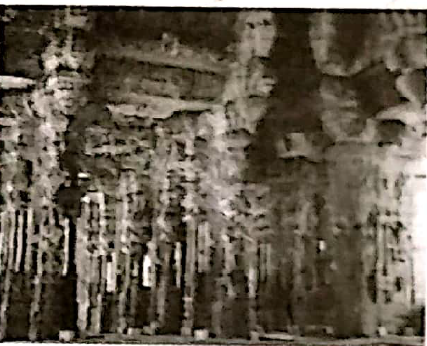
4. Given below is a picture of the ‘musical pillars’. These monolithic pillars are associated with which of the given temples?
(A) Virupaksha Temple
(B) Venkateswara Temple
(C) Vitthala Temple
(D) Meenakshi Temple
- Answer: (C) Vitthala Temple
5. What was the jizya tax imposed by some sultans?
(A) A tax on all agricultural produce to fund the army.
(B) A trade tax levied on merchants at port cities.
(C) A tax on non-Muslim subjects for protection and exemption from military service.
(D) A pilgrimage tax paid by everyone visiting a sacred site.
- Answer: (C) A tax on non-Muslim subjects for protection and exemption from military service.
6. How did Babur win the First Battle of Panipat in 1526, leading to the establishment of the Mughal Empire?
(A) He formed a strategic alliance with the Rajput clans against Ibrahim Lodi.
(B) He used a much larger army and superior cavalry tactics.
(C) He relied heavily on new warfare technologies like gunpowder, field artillery, and matchlock guns.
(D) He blockaded Delhi, forcing the Lodi army to surrender due to lack of supplies.
- Answer: (C) He relied heavily on new warfare technologies like gunpowder, field artillery, and matchlock guns.
7. What was the doctrine of sulh-i-kul promoted by Emperor Akbar?
(A) A military strategy of continuous conquest to keep enemies at bay.
(B) A revenue system based on taxing non-Muslims heavily.
(C) A policy of ‘peace with all’ or tolerance towards all faiths.
(D) A system of creating marriage alliances only with Central Asian rulers.
- Answer: (C) A policy of ‘peace with all’ or tolerance towards all faiths.
8. What was the purpose of the ‘house of translation’ established by Akbar at Fatehpur Sikri?
(A) To translate Persian texts into various Indian languages for the common people.
(B) To have major Sanskrit texts like the Mahabharata and Ramayana translated into Persian.
(C) To train diplomats and translators for service in foreign courts.
(D) To create a new, unified language for the entire Mughal Empire.
- Answer: (B) To have major Sanskrit texts like the Mahabharata and Ramayana translated into Persian.
9. Malik Kafur was a general under which ruler?
(A) Muhammad bin Tughlaq
(B) Ala-ud-din Khilji
(C) Babur
(D) Sher Shah Suri
- Answer: (B) Ala-ud-din Khilji
10. Who introduced token currency with copper coins?
(A) Iltutmish
(B) Ala-ud-din Khilji
(C) Muhammad bin Tughlaq
(D) Akbar
- Answer: (C) Muhammad bin Tughlaq
B. Assertion-Reason Questions
1. Assertion (A): The Battle of Talikota led to the fall of Vijayanagara.
Reason (R): The Deccan Sultanates united to defeat Vijayanagara forces. Corrected Answer:
(A) Both A and R are true and R is the correct explanation of A.
2. Assertion (A): Maharana Pratap lost the Battle of Haldighati.
Reason (R): He had superior numbers and resources.
Answer: (C) A is correct but R is incorrect.
C. Fill in the blanks using appropriate word(s):
- After Babur’s death in 1530, his son Humayun struggled to hold the empire together.
- The Sun Temple at Konark was built by Narasimha.
- The Sikh’s sacred text, Guru Granth Sahib, was first compiled by Guru Arjan Dev.
- The Hundi system enabled merchants to transfer funds across political boundaries without physically transporting currency, making them less vulnerable to plunder.
- There are historical examples of Rajput women jumping into mass fires to avoid being captured and enslaved; this Jauhar was considered a heroic act of final resistance and a means of preserving one’s honour.
D. Match the columns:
- 1. Baburnama matches with (b) Autobiography
- 2. Jizya matches with (c) Tax on non-Muslim subjects
- 3. Musical pillars matches with (a) Vitthala Temple
- 4. Panch Mahal matches with (e) Fatehpur Sikri
- 5. Alamgir matches with (d) Aurangzeb
E. Very Short Answer Type Questions
1. Name the foreign dynasties that ruled over the Delhi sultanate.
Answer: The foreign dynasties that ruled the Delhi Sultanate are the Mamluk, Khalji, Tughlaq, Sayyid, and Lodi dynasties.
2. Why were Central Asian invaders drawn towards India?
Answer: Central Asian invaders were drawn towards India not only for its wealth, riches, and territorial ambitions but also to spread their own versions of religion, sometimes by force if necessary.
3. The term ‘medieval’ refers to which period of History?
Answer: In Indian history, the term “medieval” refers to the period from the 11th to the 17th centuries CE.
4. What was the unique paik system of the Ahoms?
Answer: The Ahoms’ unique paik system called on every able-bodied man to provide service to the state through labor or military duty in exchange for land rights. This allowed the rulers to create public infrastructure and maintain a large standing force without a permanent army.
F. Short Answer Type Questions
1. Why is Rani Durgavati revered as a heroic figure in Indian history?
Answer: Rani Durgavati is remembered as a valiant queen of the Garha kingdom. From all accounts, she ruled wisely and made her kingdom prosperous. She kept an army of 20,000 soldiers and 1,000 elephants, with which she repelled several attempted invasions. When a general sent by Akbar attacked her kingdom in 1564, despite being outnumbered and outmatched in weaponry, she led her troops and fought bravely. Wounded, she took her own life on the battlefield to avoid capture. She was only 40. Her sacrifice became a symbol of regional pride and resistance, and she is still revered as a heroic figure in Indian history.
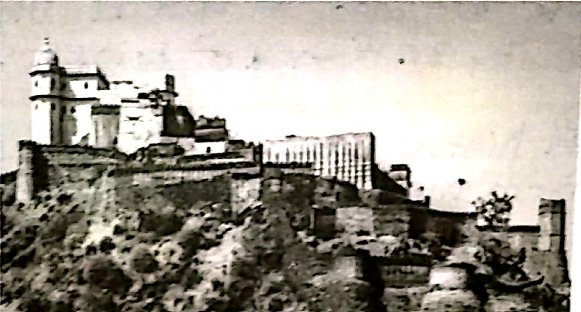
2. Identify the given picture of a popular fort in the Aravalli hills. Who built it? What is it famous for?
Answer:
- This is Kumbhalgarh Fort, built by Rana Kumbha.
- It is famous for its massive 36-kilometer-long wall, which is one of the longest continuous walls in the world.
3. Name the two brothers who had established the Vijayanagara Empire. From where did they get inspiration to establish their capital?
Answer:
- Harihara and Bukka established the Vijayanagara Empire.
- According to popular folklore, Harihara and Bukka witnessed a remarkable sight at Hampi: a hare turning around and chasing a pack of hounds, symbolizing unexpected strength and courage. When they recounted this incident to their guru, Vidyaranya, he interpreted it as a symbol of resilience and bravery and advised them to establish their capital there.
G. Long Answer Type Questions
1. How did Akbar expand and stabilize the Mughal Empire?
Answer:
- Akbar expanded his empire through extensive conquests (e.g., Gujarat, Bengal, and the Deccan) and strategic matrimonial alliances, particularly with the Rajputs.
- To stabilize it, he implemented the Mansabdari system, regularized the land revenue system crafted by Raja Todar Mal, and introduced the inclusive and tolerant policy of Sulh-i-Kul.
2. Explain the emergence and establishment of the strong and centralised Sikh Empire in the country.
Answer:
- In 15th-century Punjab, Guru Nanak spread the message of equality, compassion, and the oneness of God; his followers came to be known as Sikhs.
- Several Sikh confederacies emerged in the Punjab region. They were ultimately unified through the efforts of Maharaja Ranjit Singh at the turn of the 19th century. Ranjit Singh’s military acumen, diplomatic skills, and religious tolerance allowed him to establish a strong, centralized Sikh Empire which spanned much of the northwest, including parts of Kashmir. Until the mid-19th century, this empire resisted both Mughal remnants and later British expansion.