
P.P.Publication NCERT WORKSHEETS
Exploring Society: India and Beyond
Textbook of Social Science Class 8
A. Multiple Choice Questions
For questions 1-10, select the correct alternative.
1. Identify the correct sequence of the cycle of nature by choosing the appropriate option.
I. The tree becomes part of the soil enriching it.
II. A tree falls in the forest.
III. It decomposes with the bacteria, fungi and insects feeding on it.
IV. Eventually some will fall and the cycle starts again.
V. New trees and plants grow from seeds.
Options:
(A) V, IV, III, II, I
(B) II, III, I, V, IV
(C) I, II, III, IV, V
(D) I, III, II, V, IV
2. Traditionally, why did communities have a system of regulating fishing during the spawning season?
(A) To ensure that the fish population remains available for crocodiles
(B) To enable the maintenance of the fish population
(C) Because fishing was not easy in that season
(D) Because eating fish caused diseases in the season.
3. Observe the picture given below:
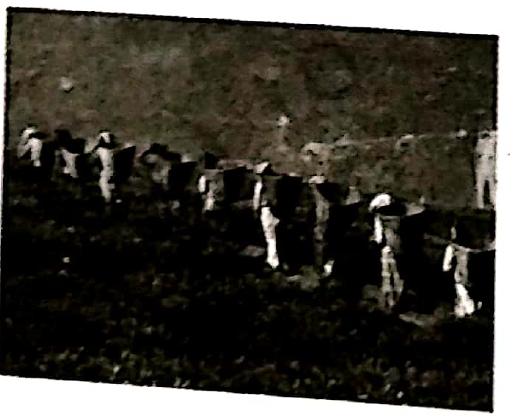
This is a picture from a state of India that faced declining yields and mounting debts from expensive chemical inputs. Thereafter, the state government announced a policy to promote organic farming throughout the state. Identify the state.
(A) Arunachal Pradesh
(B) Tamil Nadu
(C) Kerala
(D) Sikkim
4. Timber is renewable only if:
(A) We store it well
(B) Forests are overcut
(C) Forest regeneration is allowed
(D) It’s sold in markets
- Which of the following is considered renewable energy source?
(A) Natural gas
(B) Oil
(C) Wind
(D) Diesel
- Which of these is not a characteristic of a resource?
(A) Economically feasible
(B) Technologically accessible
(C) Religiously forbidden
(D) Culturally acceptable
- When does nature become a resource?
(A) When it exists in the wild
(B) When humans admire it
(C) When it is used for human needs
(D) When it’s untouched by humans
- Which dam is built on the Kaveri river in Tamil Nadu?
(A) Almatti dam
(B) Supa dam
(C) Mettur dam
(D) Idukki dam
- The decline in the variety of life on earth is:
(A) Enrichment
(B) Ecosystem restoration
(C) Biodiversity loss
(D) Overexploitation
- Which of the following enable holistic soil management?
(A) Mulching and multi-cropping
(B) Improper use of chemical fertilisers
(C) Monoculture cropping
(D) Excessive tillage
B. Assertion-Reason Questions
In the questions given below, there are two statements marked as Assertion(A) and Reason(R). Read the statements and choose the correct option.
- Assertion (A): Overfishing disrupts the balance of marine life.
Reason (R): Tuna fish consume smaller fish and keep fish population in check.
(A) Both A and R are true and R is the correct explanation of A
(B) A is correct but R is incorrect
(C) A is incorrect but R is correct
(D) Both A and R are true but R is not the correct explanation of A
- Assertion (A): Coal is a renewable resource.
Reason (R): Coal takes millions of years to form.
(A) Both A and R are true and R is the correct explanation of A
(B) A is correct but R is incorrect
(C) A is incorrect but R is correct
(D) Both A and R are true but R is not the correct explanation of A
C. State True or False
- One of the largest solar parks located in Rajasthan can generate enough electricity to power about 15 percent of the current needs of Rajasthan. TRUE
- Almost 80 percent of the area of Punjab has been classified as ‘well-utilized’. TRUE
- Natural resources are evenly distributed across our planet or even within countries. FALSE
- A general principle of Nature is that it functions in a restorative and regenerative way. TRUE
- In many indigenous traditions of the world, Nature is considered sacred. TRUE
D. Very Short Answer Questions
Answer to each question should not exceed 40 words
1. ‘The Earth has treasures, many of which have formed over millions of years, and which humans have taken and learnt to use.’ What do these treasures include?
Answer:- These treasures include natural resources and minerals like iron, coal, petroleum, etc. It took millions of years for them to form, and human beings use them in many ways.
2. According to scientists, what has irresponsible treatment of natural resources led to?
Answer:- According to scientists, irresponsible treatment of natural resources has led to serious environmental and social problems, including loss of biodiversity, soil devastation, deforestation, pollution, and natural disasters.
3. Write two advantages of gentle ploughing.
Answer:- Two advantages of gentle ploughing are:
- It prevents soil erosion.
- It maintains soil fertility.
4. What three conditions must an entity meet to be called a resource?
Answer:- An entity must meet these three conditions to be called a resource: utility, value, and accessibility.
E. Short Answer Type Questions
1. ‘We are pushing the use of natural resources beyond their capacity to regenerate.’ Elaborate.
Answer:- When we push the use of natural resources beyond their capacity to regenerate, it refers to a situation where human consumption exceeds the Earth’s ability to naturally replenish those resources. Natural resources like water, forests, soil, fish, and fossil fuels have regenerative cycles. When humans use resources faster than they can regenerate, it causes overexploitation and consequences that exceed natural regeneration.
2. Explain the significance of The International Alliance for Solar Energy (IASE) launched in 2015.
India and France launched the International Alliance for Solar Energy (IASE) in 2015—a coalition of sunshine-rich countries aiming to harness solar power. The alliance focuses on countries blessed with abundant sunlight throughout the year. India has helped channel billions of dollars into solar projects across developing nations, sharing technical expertise and creating affordable financing options.
3. How do “ecosystem functions” differ from “ecosystem services” and how do humans benefit from the latter?
i) Ecosystem functions are the natural processes and interactions that occur within an ecosystem. Examples include energy flow, nutrient cycling, soil formation, and the decomposition of organic matter.
ii) Ecosystem services are the benefits humans derive from those ecosystem functions. Examples include food, water, climate regulation, air purification, etc.
iii) Humans benefit by fulfilling basic needs to stay healthy, as well as gaining economic, cultural, and ecological benefits.
F. Long Answer Type Questions
Answer to each question should not exceed 120 words.
1. Differentiate between renewable and non-renewable resources, giving examples for each and state the condition for renewable resources to remain renewable.
2. What is Vrikshayurveda, and how does this ancient Indian botanical science contribute to sustainable agriculture? Vrikshayurveda is an ancient Indian botanical science that focuses on the study and care of plants and trees. The term comes from Sanskrit, with ‘vriksha’ meaning tree and ‘ayurveda’ meaning the science of life or health. This traditional knowledge system dates back several millennia and was formalized in texts such as Surapala’s Vrikshayurveda around the 10th century CE.
G. Case-Based Question
Read the source given below and answer the questions that follow:
One of the ways we could categorise natural resources is based on the uses we put them to — essential for our life, source for materials and sources for energy.
Resources essential for life – Life could not exist on Earth without the air we breathe, the water we drink and the food we eat. We take these from the atmosphere, the rivers and ponds, and through the cultivation of soil or other living things. We cannot make the air we breathe, the water we drink, or the soil which gives us food.
Resources for materials – Human beings create physical objects out of Nature’s gifts. We make them for our utility or to create things of beauty that enrich our lives and those of others – a piece of wood can be transformed into a chair and also carved into a statuette. India’s geographical diversity provides us with a wide variety of natural resources, from wood to marble, and coal to gold.
Resources for energy-Energy is a cornerstone of modern living — electricity for our buildings, transportation, and all types of production processes. This energy can come from diverse natural sources: coal, water, petroleum, natural gas, sunlight, wind, etc.
1. ‘Energy is a cornerstone of modern living’. Where does this energy come from? This energy can come from diverse natural sources, for example: coal, water, petroleum, natural gas, sunlight, wind, etc.
2. Why do human beings create things out of nature? Human beings create physical objects out of nature’s gifts. They make them for their utility or to create things of beauty that enrich our lives and those of others. For example, a piece of wood can be transformed into a chair.
3. Why are resources considered essential for life? Resources are essential for life because life could not exist on Earth without the air we breathe, the water we drink, and the food we eat. We take these from the atmosphere.