
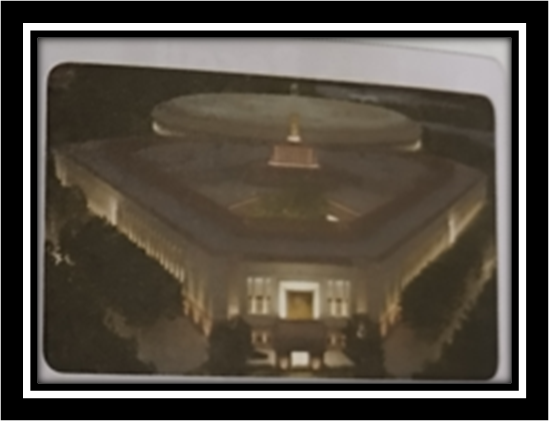
A. Picture-based Questions
1. Name the building.
Answer:
This is the New Parliament Building of India, located in New Delhi.
2. Write two functions of this.
Answer:
1.It serves as the supreme law-making body of India, where laws are proposed, debated, and passed.
2.It conducts sessions of the Lok Sabha and Rajya Sabha, where elected representatives discuss national issues and government policies.
●
3. Who is the head of this house?
Answer:
The building houses both Lok Sabha and Rajya Sabha:
•Head of Lok Sabha: Speaker of the Lok Sabha
•Head of Rajya Sabha: Vice President of India (ex-officio Chairperson)
So depending on the house being referred to:
•Lok Sabha: Speaker
•Rajya Sabha: Vice President of India
🅑 True or False Statements
1.The law-making body of the state is the legislative council.
❌ False – It is the Legislative Assembly (Vidhan Sabha) in most states.
2.The Rajya Sabha is the lower house of the Parliament.
❌ False – It is the Upper House.
3.The Lok Sabha can have a maximum of 520 members.
❌ False – It can have up to 550 members (530 from states, 20 from union territories).
4.The state government is responsible to maintain the law and order in the state.
✅ True
5.The High Court is the highest court in the state.
✅ True
Match the Following
Answer:-
| Column A | Column B |
| 1. Head of the State | Governer |
| 2. Head of the Country | President |
| 3. Vidhan Sabha | Legislative Assembly |
| 4. MP | Member of Parliament |
| 5. MLA | Members of Legislative Assembly |
D. Answer the following questions
1. Why do we need a government?
We need a government to maintain law and order, make and enforce rules and laws, and provide essential services to people. The government also ensures defense, collects taxes, promotes education, and protects the rights and freedoms of citizens. It is the foundation of democracy, where people elect leaders to represent them and govern the country.
2. Write the three features of the central government.
1.The Central Government, also called the Union Government, governs the entire country.
2.It is composed of the President, Vice President, Prime Minister, Council of Ministers, and the Parliament (Lok Sabha and Rajya Sabha).
3.It is responsible for law-making, national defense, foreign relations, and supports the state governments.
3. Differentiate between Lok Sabha and Rajya Sabha.
| Feature | Lok Sabha | Rajya Sabha |
| Also called | House of the People | Upper House |
| Members | Maximum 550 (currently 543 elected) | Maximum 250 (238 elected + 12 nominated) |
| Elected by | Direct election by the people | Indirectly by state legislatures |
| Term | 5 years | 6 years (1/3rd retire every 2 years) |
| Presided by | Speaker | Vice President of India |
| Dissolution | Can be dissolved | Cannot be dissolved (permanent body) |
4. Write a short note on the judiciary.
The Judiciary is an independent body that protects the rights of citizens and ensures justice. The Supreme Court of India in Delhi is the highest judicial authority. It is headed by the Chief Justice of India. Every state has a High Court, and below that are district courts. Judges interpret laws, settle disputes, and check misuse of power by other branches of government.
5. What happens in a general election regarding political party candidates?
In a general election, different political parties nominate their candidates to contest elections. The people of India vote to select their representative. The party with the majority forms the government. If no single party gets a majority, a coalition government may be formed. The party with the second largest number of seats becomes the opposition.